Treasure Island Project

92 kilometres of strike on the Valentine Lake Fault Zone. Two discoveries in 2026.
Aerial view of a winding river flowing through a dense forest with some areas of autumn foliage under a cloudy sky.

Overview

The Treasure Island Project is Pirate Gold’s 100%-owned flagship asset in the heart of Newfoundland’s Central Gold Belt. The district-scale land package covers 78,600 hectares and holds the longest strike length (92 km) on the Valentine Lake Fault Zone, the structure that hosts the 4 Moz Valentine Gold Mine. The property delivers two things at once: bonanza-grade orogenic gold at Moosehead, and a new copper-gold porphyry/epithermal discovery at Crippleback.

‍

The majority of this expansive trend remains vastly underexplored, offering immense potential for new discoveries.

Topographic map highlighting locations of Fleur de Lys, Treasure Island, and Grey River Projects with skull icons, along with Moosehead and Crippleback areas near Valentine Lake Fault Zone.
Light beige textured paper background with a subtle vignette effect.

Highlights

Bonanza-Grade Gold

Moosehead has returned 70.29 g/t Au over 9.05 m and 44.96 g/t Au over 11.9 m, and in 2026 added 65.1 g/t Au over 3.25 m in the new Rib Vein.

New Copper-Gold Discovery

Moby Dick, announced June 2026: 0.54% Cu Eq over 180.8 m and 0.24% Cu Eq over 299.4 m inside a 4 km alteration system that is mostly untested.

Strategic Land Position

The largest mineral licence package and longest continuous strike length (92 km) on the Valentine Lake Fault, the same structure that hosts the 4 Moz Valentine Gold Mine.
Dark textured background with a gold compass rose featuring a skull in the top right corner and thin gold border lines.
Topographic map showing gold mining zones in eastern Canada, highlighting Hammerdown and Queensway by New Found Gold Corp, Moosehead by Pirate Gold Corp, and Valentine Lake by Equinox Gold with marked sub zones and fault lines.
Light beige textured paper background with a subtle vignette effect.

Moosehead Zone

The Moosehead Zone is the primary area of focus and the most advanced prospect on the property. Moosehead demonstrates that the Valentine Lake Fault Zone is not just structurally significant—it is fertile. Drilled only to shallow depths (~150m), the zone has consistently delivered "bonanza-grade" intercepts, confirming a robust mineralizing system that remains open in all directions.

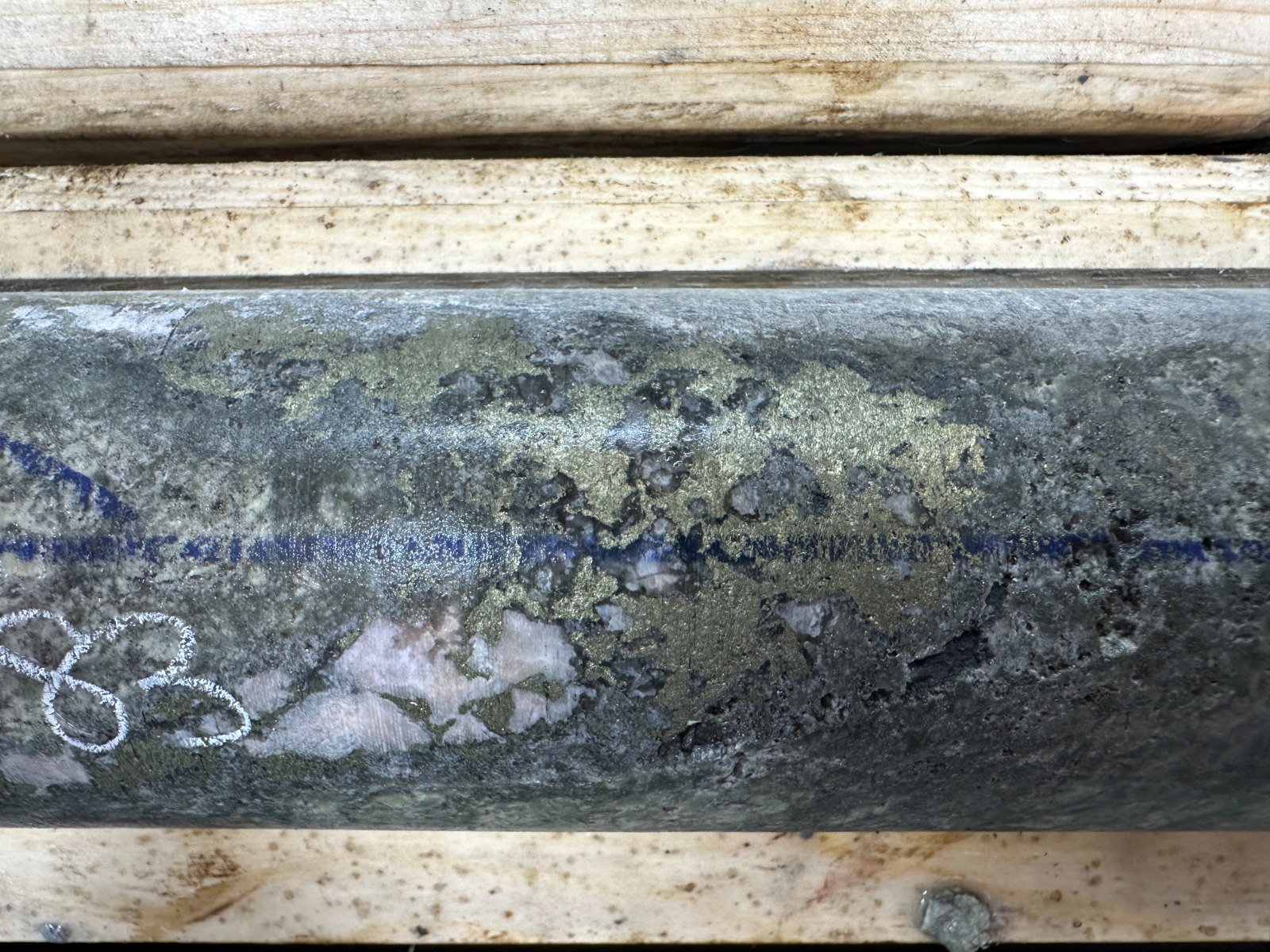
  • High-Grade Orogenic Gold: Over 135,000 m of drilling since 2018 has defined seven zones of mineralization along parallel fault structures (Western, Eastern and 552), now joined by the Rib Vein and the newly identified Caribou Fault
    ‍‍‍
  • ‍Drill Defined: The Eastern Trend is drill defined over an 800 m strike length and to vertical depths of 150 m; all zones remain open for expansion‍
  • Eastern Trend: MH-18-01 intersected 44.96 g/t Au over 11.90 m and MH-18-39 intersected 70.29 g/t Au over 9.05 m; 2026 drilling at the southern extension returned 30.6 g/t Au over 1.35 m at roughly 20 m vertical depth (PGC-26-112)‍
  • Western Trend: MH-24-649 intersected 69.48 g/t Au over 4.85 m and MH-24-648 intersected 40.89 g/t Au over 4.30 m; 2026 drilling added 21.4 g/t Au over 2.20 m (PGC-26-051A) and 4.25 g/t Au over 6.65 m (PGC-26-087)‍
  • Rib Vein (2026 discovery): A new structure linking the Eastern and Western Trends, with 65.1 g/t Au over 3.25 m in PGC-26-028. Now traced over 200 m of strike and to 90 m depth, and open‍
  • Caribou Fault (2026 discovery): A newly identified fault parallel to the Eastern and Western Trends, returning 2.88 g/t Au over 2.45 m in first-pass shallow drilling
  • The Upside: Three new gold structures since late 2025, plus more than a dozen geophysically defined structures with the same orientation as Moosehead still untested
  • ‍
Textured beige paper background with subtle darker edges and light center.

High-Grade

Orogenic Quartz-Carbonate Veins

150m

Current Drilling Depth

7

Defined zones, all open along strike and depth.
Drill Hole
Target Zone
From (m)
To (m)
Length (m)
Au (g/t)
MH-21-346
Eastern Trend
117.65
122.4
4.75
20.75
MH-22-359
75 Zone
19.44
20.44
1
95.03
MH-20-86
Eastern Trend
271.3
276.5
5.2
16.85
MH-21-234
75 Zone
44.75
49.55
4.8
17.56
Dark textured background with subtle gold corner accents.

The Crippleback Zone

Overview: Crippleback is a 32 km by 8 km copper-gold district in the southern portion of the Treasure Island Project, hosted within the Crippleback Intrusive Suite along roughly 40 km of the Valentine Lake Fault Zone. In June 2026, first-pass drilling here delivered Moby Dick, a grassroots copper-gold porphyry/high-sulphidation epithermal discovery that has returned broad mineralization from the bedrock surface to nearly 500 m downhole. Where Moosehead brings high-grade gold, Crippleback brings scale: more than 100 copper and gold occurrences, a 4 km alteration system and a district with almost no historical exploration for this style of mineralization.

Geological Context: Crippleback occupies the same tectonic position on the Valentine Lake Fault Zone as the Valentine Gold Mine (4 Moz Au), located along strike to the southwest. The Crippleback and Valentine Lake Intrusive Suites are nearly identical in age (564 to 565 Ma) and are the two largest exposures of Precambrian basement along the fault. What sets Crippleback apart is what sits inside the intrusion:

  • ‍Moby Dick alteration zone: A large advanced argillic alteration system (montmorillonite, kaolinite, pyrophyllite) first identified in 2024. Drilling has traced it over approximately 4,000 m of strike, up to 850 m in width and to 500 m depth. Its full extent is unknown and is limited only by drilling to date.
  • Geophysical signature: The modelled alteration zone closely matches a low-resistivity anomaly from the 2026 airborne EM survey. A second anomaly with a similar signature, the Western EM anomaly, sits 2.5 km to the west.‍
  • Mineralization styles: Three styles have been identified at Moby Dick, including a magnetite-chalcopyrite copper-gold core zone traced through all three assayed holes. That core correlates with the central low-resistivity portion of the EM anomaly and is interpreted to continue beneath Crippleback Lake.

The Moby Dick Discovery
Three holes have intersected broad copper-gold mineralization across approximately 100 m of strike and to vertical depths of about 340 m, with mineralization largely confined to the alteration envelope:

  • PGC-26-068 (discovery hole): 0.54% Cu Eq over 180.8 m, including 1.48% Cu Eq over 49.4 m
  • PGC-26-058: 0.38% Cu Eq over 112.4 m, including 0.72% Cu Eq over 45.0 m
  • PGC-26-118 (100 m step-out): 0.24% Cu Eq over 299.4 m from 12.6 m downhole, including 0.43% Cu Eq over 56.5 m, with a further 0.23% Cu Eq over 72.7 m below a late mafic dyke

Most of the four-kilometre alteration system remains untested.

Exploration Strategy
Crippleback is being advanced within Pirate Gold’s fully funded 50,000 m drill program, with drilling and district-scale geophysics running in parallel:

  • Barge drilling: A barge-mounted rig has been contracted to test the interpreted continuation of the Moby Dick core zone beneath Crippleback Lake, the first time this part of the system has been drilled.
  • Mobile MT survey: An airborne Mobile MT survey (4,345 line-km at 100 m spacing) is imaging resistivity to 1 to 2 km depth across the southern Treasure Island Project, to refine the geological model and target the deeper, stronger parts of the system.
  • Western EM anomaly: The first hole into this target returned a broad anomalous copper-gold interval with narrow higher-grade zones and did not fully explain the EM response. Follow-up drilling is planned from newly established access to the south.
  • Regional targets: Evidence of orogenic gold on the Scurvy Fault, 1.5 km south of Moby Dick, and widespread advanced argillic alteration at surface at Clipper Brook, 11 km east, where a 10 km resistivity target is now permitted for its first drilling since 1951.‍
    ‍
  • Investment Thesis: Crippleback gives shareholders exposure to a new copper-gold porphyry/epithermal discovery in a system measured in kilometres, on the same structure that hosts the 4 Moz Valentine Gold Mine. Three holes in, the mineralized envelope is broad, the alteration footprint is 4 km long and still open, and the surrounding 32 km corridor carries more than 100 copper and gold occurrences that have seen little historical exploration. With a fully funded program, barge drilling and deep-penetrating geophysics, Crippleback is where Pirate Gold is hunting for its next discovery.

Light beige textured paper background with a subtle vignette effect.

Copper-Gold Discovery

Moby Dick returned 0.54% Cu Eq over 180.8 m and 0.24% Cu Eq over 299.4 m in a grassroots porphyry/high-sulphidation epithermal system.

District Scale

A 32 km by 8 km copper-gold corridor with more than 100 occurrences and a 4 km alteration system that remains mostly untested.

The Mine Next Door

Same fault zone, same tectonic position and same-age intrusive suite as the 4 Moz Valentine Gold Mine, with orogenic gold now identified on the Scurvy Fault.
Dark textured background with subtle gold corner accents.